
by Shane McLean
I failed English throughout high school. When I was a newly certified personal trainer in 2009, a veteran trainer had to explain how to teach clients to squat because I had no idea.
Having no idea ended up being the theme of my first few years as a trainer, but outwardly, I was faking success; I “knew it all.” These are perfect qualifications for becoming a freelance fitness writer, right?

If you said no, you are wrong. Go straight to jail and do not collect $200. Don’t you hate when that happens? Writing about how I also suck at Monopoly is not the point here, just a sore spot I had to get off my chest.
Let’s get back on track about writing as a fitness professional. I need to explain why you should listen to me and how you can overcome impostor syndrome, and I’ll share some of the tips I learned to become a better fitness writer.
Why You Should Listen
Okay, this is the brief part where I brag. If you don’t like bragging, you can skip this part and trust that I know what I’m talking about.
Here are a few of my writing accomplishments.
- The first article I was paid for was published on The PTDC, the world’s biggest website for personal trainers.
- I have been freelancing for Muscle & Fitness for nearly three years.
- I’ve written repeatedly for BarBend, Breaking Muscle, Set For Set, and Garage Gym Reviews.
- I’ve consistently published a weekly blog on my site, Balance Guy Training, for the past 10 years.
Don’t Talk Yourself Out of It
This isn’t about reviewing Xs and Os on the technical skill of fitness writing. I’m assuming you know how to compose a few coherent sentences and that your knowledge of the human body and general coaching capabilities are up to snuff.
This is more about improving your confidence and overcoming any real (or imagined) barriers preventing you from getting your words out there. One of the most persistent and powerful barriers you’ll face is “impostor syndrome,” which involves thinking you shouldn’t be doing exactly what you’re trying to do.

Impostor syndrome usually takes the form of self-defeating talk: “I’m not smart enough” or “It’s all been written before, so why should I bother?” When that self-doubt creeps in, and impostor syndrome brings up negative thoughts, these suggestions will put those thoughts to bed and help you crush it.
Overcoming Impostor Syndrome
Impostor syndrome is the feeling of doubting your abilities and feeling like a fraud. It doesn’t matter how many abbreviations and credentials you have, and nobody is immune to some degree of feeling insecure.
When these negative fears and thoughts try to take over, your motivation and productivity will plummet. Instead of getting sucked down a deep, dark hole, here’s how to pull you out of the nosedive.
- Write something. Anything. It doesn’t have to be fitness-related, but the act of writing helps get your creative juices flowing. Usually, at some point during this process, you’ll realize you do know something. The act of doing is powerful.
- Remember your successes. Whether it’s a client you’ve helped reach a long-term goal or a previous article that’s racked up plenty of page views, it helps you remember your past accomplishments. This reminds you, again, that you do know something.
- Lift something heavy. Not only will a training session get you out of your head, but the process of thinking about your technique and the cues you use to get into a lifting position will help remind you, one more time, that you know your stuff.
One short note about thinking, “It’s all been written before, so why the hell should I bother?” Sorry, actually, there’s not much to counter here because it’s true. It has all been done before. But not by you!
It hasn’t been done from your perspective with your unique know-how, thoughts, and feelings. Your clients and readers need to know what you think.
6 Tips For Better Fitness Writing
This can be a murky area because what works for me mightn’t work for you, and your general thought processes could differ. So I’m taking the big view from 10,000 feet above, which you can apply to your work.
Find Your Voice
Many great writers in the fitness space are more qualified and smarter and have a larger audience than you, that’s a fair assessment. But none of them have your voice, perspective, and experiences. It would be best to take the opportunity to find your unique voice; the only way to discover it is to write more. Don’t worry if it’s “good writing.” Just write.
When I started, I admit I wanted to be like Tony Gentilcore. I tried to be funny and informative, so I copied his writing style. But slowly, along the way, I developed my own voice and my own way of entertaining while informing.
If you’re struggling to find your writing voice, read a writer you want to emulate and imitate them in tone (not exact words). Keep at it until you feel like you’re developing your style and not just mimicking theirs.
Read More
Don’t just read fitness articles; absorb anything you can get your hands on. Reading lets you learn through osmosis. You’ll pick up vocabulary, style nuances, and even ideas to write about while increasing your general knowledge. That combination will only help your fitness writing.
Develop Professional Relationships
Social media makes developing online relationships with other coaches and writers easy. I got my start on BarBend by following one of their editors on Twitter. One day, I reached out to him and asked him what it would take to write for the site, and I’ve been on my way ever since.
When I read anything that catches my attention, I contact the writer and tell them how much I liked it, which starts a relationship. This brings me to the next point…
Seek Opinions
When I started getting published, I harassed other coaches about their opinions of my work. Granted, I had a relationship with most of them, so it wasn’t a total shot in the dark. I figured, what’s the worst they could say?
When you’re too close to your writing, you can’t always see if the content can rub people the wrong way. Your facts may be incorrect, or you may have made some grammatical whoppers. Either way, it helps to have a second pair of eyes providing feedback on your work.
Learn From Your Mistakes
I’ve lost count of the times my writing has been criticized for style, grammatical errors, opinions, or lack of facts to back up my claims. I have received tons of solicited (and unsolicited) feedback — some great, some not so great. The main thing is to try not to take it personally.
If you made a mistake, admit it, learn from it, move on, and work hard not to repeat it.
Stay in Your Lane
It’s important not to extend into territory you know nothing about. Just don’t go there. For instance, I know little about nutrition or training athletes, so I avoid writing about those topics.
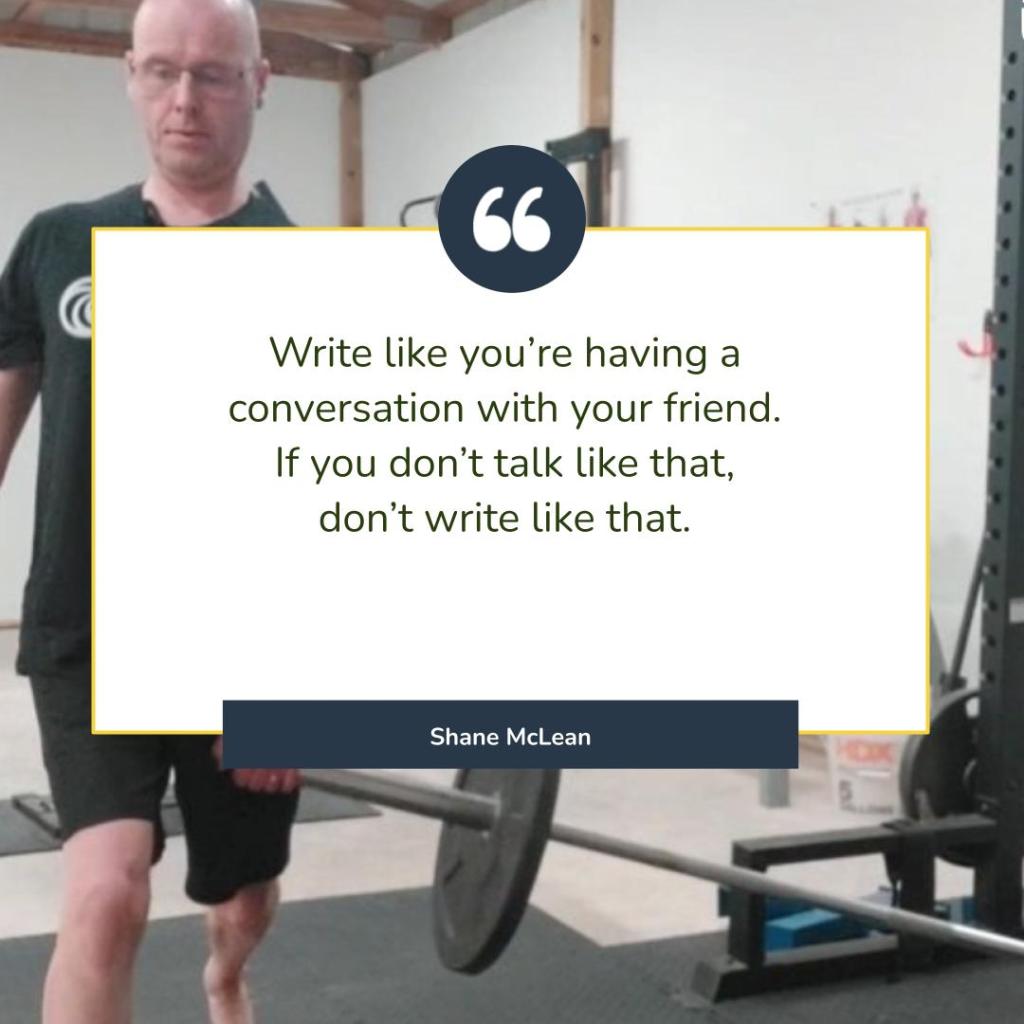
You could Google it to do some basic “research” before writing about something unfamiliar, but you’ll be a fraud. It is better to stay in your lane until you develop the knowledge to come across as a genuine expert on a given topic.
You cannot go wrong when you write about what you know, what you can back it up, and how you feel.
The Wrap-Up
Developing confidence in your writing is a process, and I’ve made my share of mistakes along the way. I’m bringing those hard knocks and experiences to our new writing service — The Write Spotters — to give personal trainers and strength coaches the confidence to hit the publish button.
The Write Spotters can provide advice for search engine optimization (SEO), draft editing, rewriting, experience-based opinions and constructive criticism, and other services to take your written content to the next level.
As a special offer, The Write Spotters is offering a complimentary assessment of your current writing skills and a free first service to make sure we are a good fit. Email us now to get started. I look forward to helping you get your writing published.
 The Write Spotters
Leave a comment